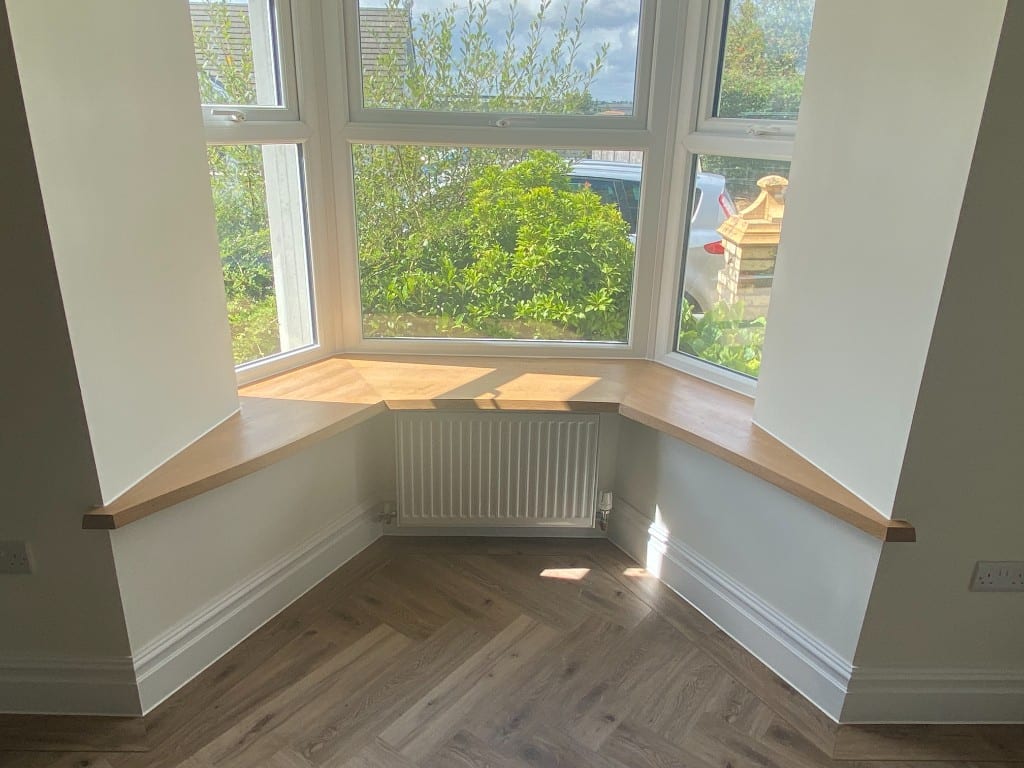
A bay window is often the first thing you notice when you walk into a front room. Get the window board, skirting and wall junctions right and the whole bay looks built-in and finished. Leave gaps, cracks or messy joints and the eye goes straight to them, especially when the sun comes through the glass.
This bay window from a recent job in South Wales shows what neat interior sealing looks like on a new window board and skirting, in two very different finishes.
Get a guide price for interior sealing in South Wales
Why Bay Windows Need Careful Sealing
Bay windows have more joints than a flat wall. Every angle in the bay means another corner where the window board meets plaster, another mitre in the skirting and another junction with the floor. Those joints move slightly as the house heats and cools, and the board and skirting shrink and swell with the seasons.
Without a proper seal you tend to see:
- Hairline gaps opening up between the window board and the plastered reveals
- Dark shadow lines along the top of the skirting where it meets the wall
- Cracked filler or paint in the corners of the bay
- Draughts and dust getting in behind the board and skirting
- Gaps at floor level where skirting meets new flooring
Once a gap appears, fresh paint alone will not hide it. The joint needs a flexible seal that can move with the timber and the wall.
The Window Board: Clean Lines Round Every Angle
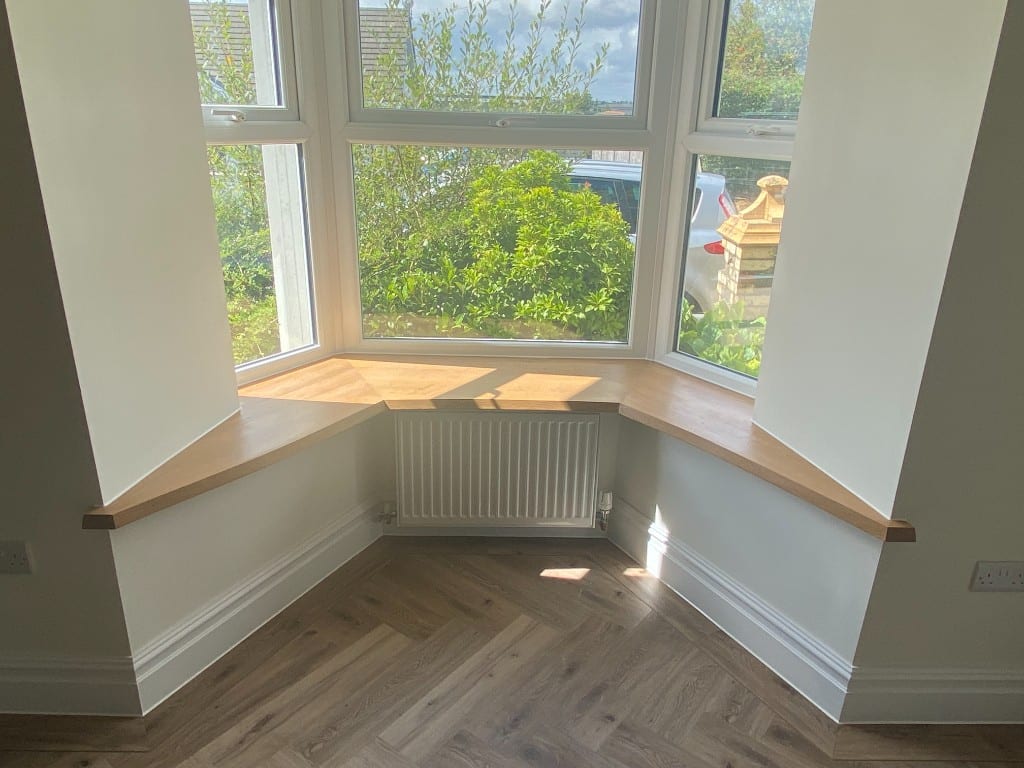
In this light, bright room the oak window board runs round all three faces of the bay. The joints we focused on were:
- Where the board meets the reveals on each side, so there is no dark line between the timber and the plaster
- Along the front edge of the board where it meets the wall below
- Round the radiator and pipework so the finish looks tidy even at low level
The aim is a seal you do not notice: a straight, even line that follows the board round every angle of the bay.
The Same Bay in a Darker Finish
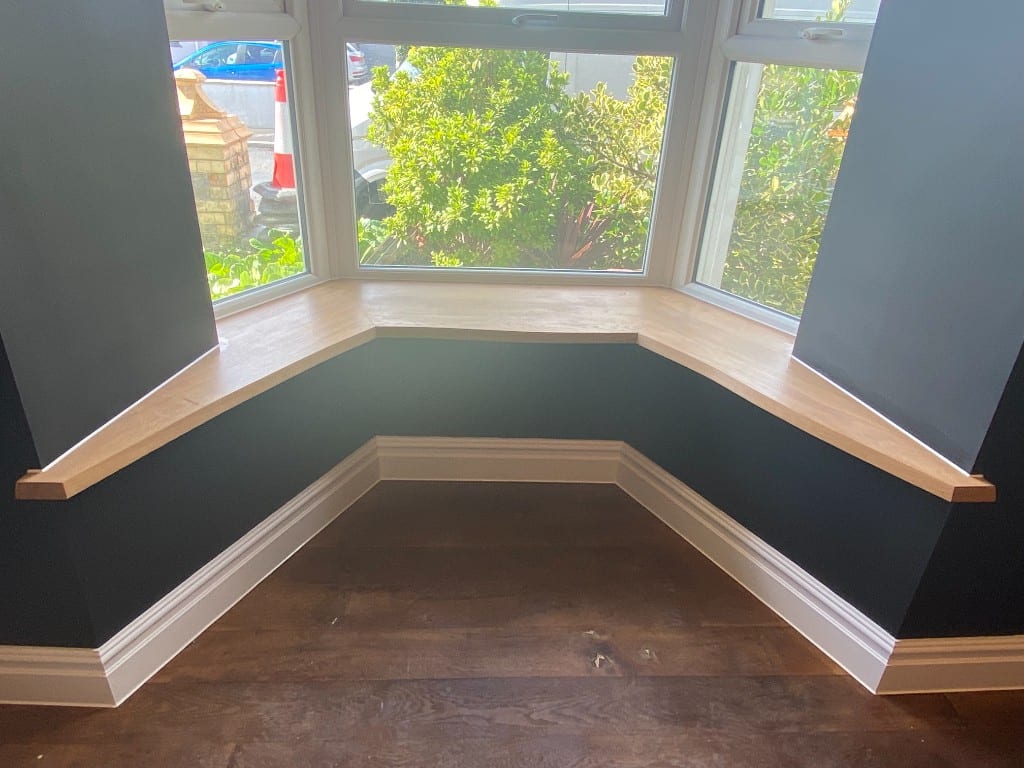
Dark walls are much less forgiving than white ones. Any gap, lump or wobbly line along the board or skirting shows up straight away against a deep colour. Here the oak board and white skirting sit cleanly against the dark walls, with straight lines at every change of angle in the bay.
If you are planning a bold paint colour in a bay, it is worth having the joints sealed properly first. The paint will only look as good as the lines underneath it.
Skirting: The Detail That Makes a Room Look Finished
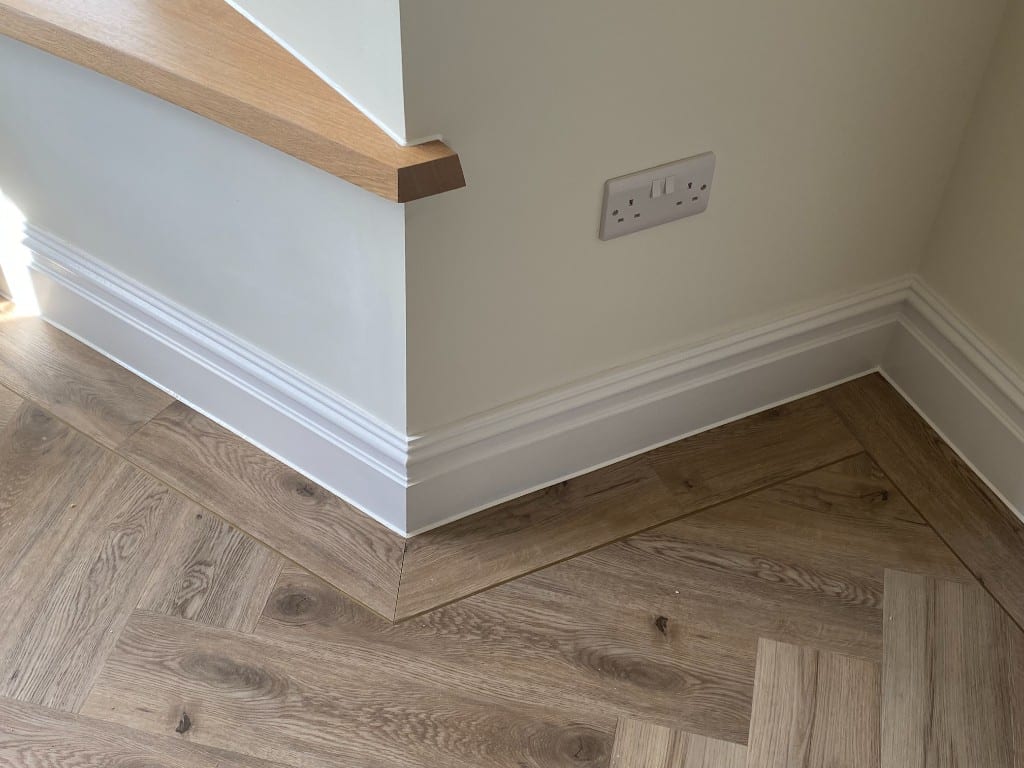
This close-up shows the corner where the bay meets the main wall, with the end of the window board above. The things to look for in a good finish are:
- A tight line along the top of the skirting with no shadow gap against the wall
- A clean joint where the skirting meets the floor, following the herringbone pattern
- Neat, square corners where the skirting changes direction
- No smears on the wall, the skirting or the flooring
This kind of detail is easy to rush on a renovation, and it is often what separates a room that looks "nearly finished" from one that looks professionally done.
When to Get Interior Sealing Done
Interior sealing around window boards and skirting is worth booking:
- After new window boards, skirting or flooring have gone in
- Before decorating, so the paint goes on over clean, sealed joints
- When gaps have opened up as a new build or extension settles
- On older bays where the joints have cracked and keep reappearing after painting
Interior Sealing Across South Wales
All Sealants Ltd seals window boards, skirting, bay windows and other interior joints for homeowners, landlords and builders across Cardiff, Newport, Swansea and the rest of South Wales, alongside our bathroom, kitchen and external sealing work.
Send us a few photos of your bay window or room through our online form and we will get back to you with a guide price.